
MetLife Stadium — Inside the 2026 World Cup Final Venue
 Available in US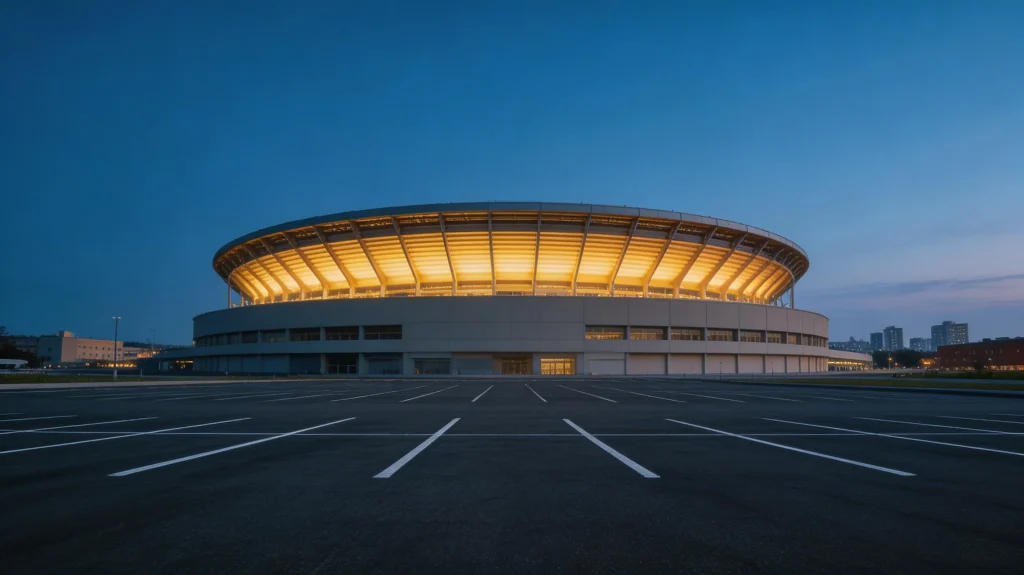
Table of Contents
The biggest match in world football will be decided in a car park in New Jersey. That is not a criticism — it is a statement of fact that tells you everything about how this World Cup is different. MetLife Stadium sits in the Meadowlands Sports Complex in East Rutherford, a suburban sprawl fifteen kilometres from Times Square, surrounded by highways and parking lots rather than the dense urban cores that typically host World Cup finals. There is no Champs-Elysees. No Copacabana. No Doha skyline. What there is, however, is the largest stadium in the 2026 tournament, a venue purpose-built for spectacle, and a setting that will shape how the final is played in ways that matter for anyone with money on the outcome.
About MetLife Stadium
I walked around MetLife for the first time during an NFL regular-season game, and the scale hits you before anything else. The stadium holds approximately 82,500 for football configurations, though the World Cup setup with a full-sized pitch and adjusted sightlines is expected to push capacity towards 80,000. It is an open-air venue — no retractable roof, no climate control — which immediately separates it from the enclosed, air-conditioned arenas that hosted the 2022 World Cup in Qatar.
MetLife opened in 2010 as the home of the New York Giants and New York Jets, replacing the old Giants Stadium that had occupied the same site since 1976. The construction cost exceeded 1.6 billion US dollars, making it one of the most expensive stadiums ever built at the time. The playing surface is artificial turf for the NFL season, but FIFA has mandated natural grass for all World Cup matches. A temporary grass pitch will be installed weeks before the tournament begins — a process that has been tested at previous events but always introduces a variable. The quality of a temporary grass surface in a stadium designed for synthetic turf is unpredictable, and the pitch condition by the time the final is played on 19 July could be a factor that influences the match and, by extension, the betting markets.
The stadium’s orientation and open roof mean that weather is an uncontrolled variable. East Rutherford in July averages daytime temperatures around 29-31 degrees Celsius with humidity that can push the feels-like temperature significantly higher. Evening kick-offs — the final is expected to start around 19:00 or 20:00 local time — will be more comfortable, but afternoon matches earlier in the tournament could see heat-related fatigue affecting players. For punters, this translates into a subtle edge: teams from warmer climates may handle the conditions better than northern European sides, and the total goals market could tilt towards unders in matches played during peak heat.
World Cup 2026 Matches at MetLife
MetLife Stadium will host the final on 19 July and is also scheduled for several group-stage fixtures and knockout-round matches. The exact allocation of group matches to MetLife depends on FIFA’s operational scheduling, but the stadium’s capacity and location make it a natural home for high-profile fixtures involving host nation USA or other major draws.
The semi-final or quarter-final allocation to MetLife has not been confirmed at the time of writing, but the venue’s status as the final host means it will see at least four to six matches across the tournament. Each match played on the same temporary grass surface degrades that surface incrementally — a point that matters more by the knockout rounds. By the time the final arrives, the pitch will have absorbed several high-intensity matches, training sessions and the New Jersey summer weather cycle. Groundskeepers will maintain it, but the difference between a fresh surface and a worn one is visible in the ball speed, the bounce, and the players’ willingness to commit to sliding tackles and quick changes of direction. Teams that rely on slick passing and quick ball movement — Spain, for example — may find a degraded surface slightly more challenging than teams who play direct, physical football.
East Rutherford and the NYC Area — The City Context
Ask any New Yorker where MetLife Stadium is, and they will say “Jersey” with a tone that implies a different planet. The stadium is technically in East Rutherford, Bergen County, New Jersey — not in New York City. For travelling fans and Australian punters planning the trip, the distinction matters. Accommodation in Manhattan is a train ride and a bus transfer away. Hotels closer to the stadium in the New Jersey suburbs are more convenient but lack the vibrancy of the city. The transit infrastructure connecting Manhattan to MetLife has been upgraded ahead of the tournament, but anyone who has navigated the NJ Transit system during a major event knows that patience is not optional.
The broader New York metropolitan area provides the media backdrop that FIFA craves. The tournament final will dominate global coverage in a way that a final in a smaller city could not, and the commercial energy of New York amplifies every narrative. For Australian fans making the journey — and the time difference means arriving several days early to adjust — New York in July offers endless distraction between matches. The danger is overspending on the trip and arriving at the stadium with depleted funds and a thinner betting bankroll than planned. Plan the travel budget separately from the betting budget. Tournament discipline applies to your wallet as much as your wagers.
How the Venue Affects Betting — Climate, Pitch, Atmosphere
Every venue at a World Cup carries a fingerprint — a combination of climate, surface, altitude, crowd composition and acoustics that tilts the playing conditions in subtle but measurable ways. MetLife’s fingerprint for the final is: warm-to-hot temperatures even in the evening, a potentially degraded temporary grass surface, an open-air atmosphere that will be deafeningly loud, and a crowd likely to include large contingents from both finalists alongside a significant American neutral presence.
The crowd composition matters because a World Cup final in North America will attract a different demographic than one in Europe or the Middle East. The American sports fan brings a different energy — louder during stoppages, quieter during build-up play, reactive to goals and near-misses rather than sustaining a constant wall of noise. For teams who feed off relentless crowd pressure — think Argentina or England — the atmosphere may feel less supportive than it would at a European venue. For teams who prefer to play in controlled silence and let the football do the talking — think Spain or Germany — the atmosphere at MetLife could be an advantage.
The pitch factor is my biggest concern from a betting perspective. Temporary grass surfaces at NFL stadiums have a documented history of issues: uneven patches, soft spots near the goal areas where foot traffic is heaviest, and a slower ball roll compared to permanent grass pitches at purpose-built football stadiums. These conditions favour teams with strong aerial games, powerful strikers and defenders who win physical duels. They disadvantage teams who rely on intricate ground passing and technical dribbling. If I were modelling the final at MetLife, I would add a small adjustment — roughly one to two percentage points — in favour of physically dominant sides over technically gifted ones. That is not enough to change a bet on its own, but it compounds with other factors.
Heat management will also influence substitution patterns. Managers may use all five permitted substitutions earlier than usual to keep legs fresh, which means the depth of a squad becomes more important than the quality of the starting eleven. Sides with a deep bench — France, England, Spain — benefit from this dynamic. Sides who rely on a core of eleven players and lack like-for-like replacements may fade in the final twenty minutes, which is historically where World Cup finals are decided. The in-play market between the seventieth and eightieth minute of the final could offer extraordinary value if one side visibly tires while the other introduces fresh attackers.
Insider Take — The Final Factor
I have attended three World Cup finals, and the venue always shapes the narrative in ways that pundits underestimate before kick-off and overstate afterward. MetLife Stadium will deliver spectacle — the sheer scale of the venue, the noise, the global television audience — but it will also deliver imperfections. The pitch will not be flawless. The weather will be a factor. The logistics of getting eighty thousand people into a suburban stadium without a direct metro connection will create tension outside the ground that seeps into the atmosphere inside.
For punters, the MetLife final is a market where the under-goals play deserves more attention than it typically receives. World Cup finals trend towards caution — only three of the last ten finals have produced more than three goals — and the combination of heat, a heavy pitch and the stakes of the occasion will encourage conservative tactics from both managers. The under 2.5 goals line in the final has been the right call in seven of the last ten tournaments, and I see nothing about MetLife’s conditions that disrupts that pattern.
The other angle is the match to go to extra time, which typically prices around 3.00 to 3.50. Four of the last seven World Cup finals have gone beyond ninety minutes, and a close, tense encounter on a warm New Jersey evening is exactly the kind of setting where neither side takes risks and regulation time ends level. I will carry this bet into the tournament’s knockout phase as part of my long-term final portfolio, adjusting the stake as the two finalists become clearer.
