
Turkey at the 2026 World Cup — The Group D Wildcard
 Available in US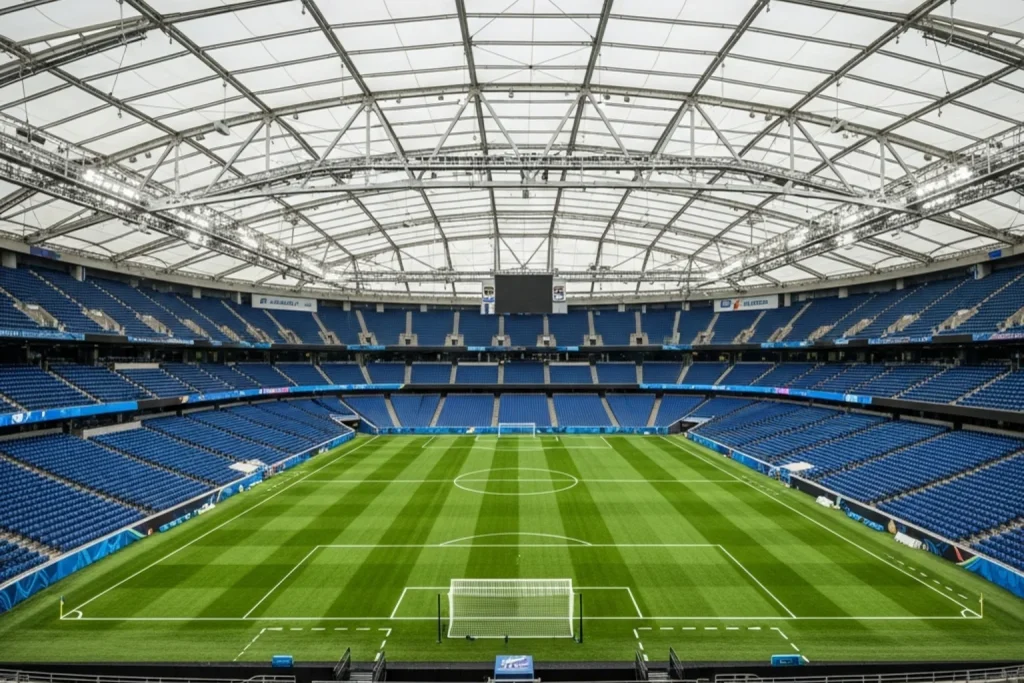
Table of Contents
The last time Turkey appeared at a World Cup, it was 2002 and they finished third. Not third in their group — third in the entire tournament. Twenty-four years is a long time between World Cup appearances, and the Turkish side heading to North America in 2026 carries both the burden of that absence and the energy of a nation that has been waiting a generation for this moment. For Aussie punters, Turkey’s presence in Group D alongside the Socceroos makes them the most personally relevant opponent in the tournament — and the one that needs the most careful analysis.
I have watched Turkey’s qualifying campaign and their recent competitive fixtures in detail, and my assessment is that they are better than the casual market gives them credit for but worse than the Turkish media believes. The truth sits somewhere in between: a squad with genuine technical quality in midfield, a passionate fan base that will travel to Vancouver in numbers, and a tactical system that can compete with any mid-tier opponent — but also a team with limited World Cup experience, a vulnerability to high-tempo pressing, and a defensive record that raises questions about their ability to shut out games when it matters.
Squad and Style — Technical Quality with a Fragile Edge
Turkey’s squad is built around a core of players from the Turkish Super Lig supplemented by a handful of exports to the Bundesliga, Serie A and the Premier League. The midfield is the team’s engine — technically gifted players who can retain possession, switch play and create chances from central areas with a fluency that most mid-tier nations cannot match. The Turkish midfield would not look out of place in a top-eight World Cup side, and against the Socceroos’ more industrious but less technically refined middle three, that quality gap could be decisive.
The attacking options include pace on the wings and a central striker who has been prolific in Turkish domestic football without quite replicating that form at international level. Turkey’s goal threat comes primarily through intricate combination play in the final third — quick one-twos, overlapping runs, and through balls into the channels. It is aesthetically pleasing but tactically vulnerable to teams that sit deep and deny space between the lines. Against a Socceroos side that will likely adopt exactly that approach, Turkey may find themselves with 60% possession and very few clear chances.
Defensively, Turkey are inconsistent. They can produce disciplined, organised performances where the back four holds its shape and the midfield screen absorbs pressure — but they can also switch off for critical moments, concede from set pieces, and lose concentration when protecting a lead. The defensive record in European qualifying was adequate rather than impressive, and the step up in quality from qualifying opponents to World Cup group-stage opponents will test the back line in ways it has not been tested before. For punters, Turkey’s defensive inconsistency makes the over/under market unpredictable and the clean sheet market risky.
Group D Context — The Socceroos Rival
Group D is a three-way fight for second place behind the USA, and Turkey versus Australia on matchday one is the fixture that will likely determine which team advances and which goes home. I cannot overstate the importance of this match for both nations. Turkey need a result to build momentum against the USA and Paraguay. Australia need a result to establish a platform for qualification. The team that wins this match has a realistic path to the Round of 32. The team that loses faces a near-impossible task of recovering enough points from the remaining two fixtures.
The tactical dynamic of Turkey versus Australia favours a low-scoring match. Both teams will prioritise defensive solidity over attacking ambition in their opening fixture, knowing that a draw is acceptable but a loss is catastrophic. Turkey will look to control possession in midfield and create openings through patient build-up play. Australia will sit in a compact 4-5-1 shape, deny space in the central channels, and look to hit Turkey on the counter or from set pieces. The expected goals for this match sit around 1.8 to 2.0 total, which strongly supports the under 2.5 market.
The venue matters. BC Place in Vancouver is a covered stadium with an artificial turf pitch that was replaced with natural grass for the World Cup. The controlled indoor environment eliminates weather as a variable, and the crowd will be largely neutral — neither team has a significant diaspora in Vancouver. That neutrality slightly favours the Socceroos, who perform better without hostile crowd pressure, while Turkey’s emotional intensity and crowd-feeding playing style will miss the boost of a partisan audience. It is a marginal factor, but in a match likely decided by a single goal, marginal factors compound.
Odds and Markets — Where the Value Sits
Turkey’s outright odds sit north of +10000 — a vanity bet that I would not recommend to anyone. The real Turkey-related value for Aussie punters sits entirely in Group D markets. Turkey to qualify from Group D prices around 2.80 to 3.20, which is approximately fair given the competitive three-way contest for second and third. Turkey to win Group D at around 8.00 is a long shot that requires the USA to stumble, and I do not see enough evidence to justify that speculation.
The match betting is where the sharpest plays live. Turkey versus Australia is priced tightly: Turkey around 2.50 to 2.70, the draw around 3.00 to 3.20, Australia around 2.80 to 3.00. My lean is the draw at 3.00 to 3.20 — both teams’ tactical conservatism and the opening-match nerves of two sides who have been waiting years for this moment point towards a cagey, cautious contest. The under 2.5 at around 1.75 to 1.85 is the structural bet I am most confident in from the entire Group D market.
USA versus Turkey will see Turkey as significant underdogs around 4.50 to 5.50, with the home advantage compressing the USA’s price. Turkey +1.5 goals at around 1.65 is attractive — they have the midfield quality to keep the match competitive even in a loss, and the USA are unlikely to blow them out. Turkey versus Paraguay is the other tight fixture, with both teams around 2.60 to 3.00. Turkey’s midfield superiority should give them a marginal edge, and I lean towards Turkey at 2.60 in that match — it is close to a coin flip, and the technical quality difference gives Turkey the slight advantage my model demands.
Head-to-Head with Australia — What the Data Says
Turkey and Australia have met infrequently at senior international level, which means there is limited head-to-head data to work with. The few fixtures in the historical record were friendlies that carry minimal predictive value for a World Cup group match. What matters more is the stylistic comparison: how each team’s strengths and weaknesses interact against the other’s profile.
Turkey’s advantage: midfield technical quality. In the central areas of the pitch, Turkey’s passing accuracy, press resistance and creativity are a clear step above Australia’s. If Turkey control the ball in the middle third and force Australia into reactive defensive work, they will create enough half-chances to win the match from sustained pressure. Turkey’s disadvantage: vulnerability to directness. Australia’s counter-attacking profile — quick transitions through wide areas, direct balls in behind, set-piece threat — targets Turkey’s defensive inconsistency. If Australia can absorb Turkey’s possession and hit on the break two or three times per half, one of those chances will likely be converted.
The match will be decided by which team’s strengths dominate the other’s weaknesses. My probability split: Turkey win 35%, draw 30%, Australia win 35%. The implied odds for each outcome suggest the draw is marginally underpriced by the market, and that is where I have placed my position.
The Wildcard Assessment
Turkey at the 2026 World Cup are a team with the talent to reach the Round of 32 and the fragility to exit after three group matches without a win. That range of outcomes makes them the perfect wildcard — unpredictable enough to disrupt Group D’s expected order but unreliable enough to collapse under pressure. For Aussie punters, Turkey are not a team to back in the outright or progression markets. They are a team to bet on — or against — in specific Group D markets where the tactical dynamics are readable and the odds offer value.
My positions on Turkey: draw in Turkey versus Australia at 3.00 to 3.20. Under 2.5 goals in the same match at 1.75 to 1.85. Turkey to beat Paraguay at 2.60. And a pass on everything else. Turkey’s World Cup will be decided in a three-match window, and those three matches are the only ones that matter for your bankroll.
